
How NK Orthodontics Evaluates Jaw Pain and Builds a Care Plan, From Simple Home Steps to Advanced Care
If jaw pain has been slowing you down, you may need TMJ treatment in Suwanee and Tucker, GA. Many people don’t realize their jaw joint can trigger symptoms like popping, stiffness, or headaches, and the right treatment helps reduce discomfort and improve how your jaw functions.
TMJ treatment starts with a proper diagnosis: a physical exam of your jaw, a bite alignment and jaw function analysis, and imaging when needed. From there, NK Orthodontics starts with simple non-surgical options such as custom night guards or splints, jaw exercises, heat or cold packs, relaxation techniques, medication, and diet changes. Advanced options like Botox, trigger-point injections, laser therapy, or orthodontic services to correct jaw misalignment come next if needed, and surgery is considered only for severe cases.
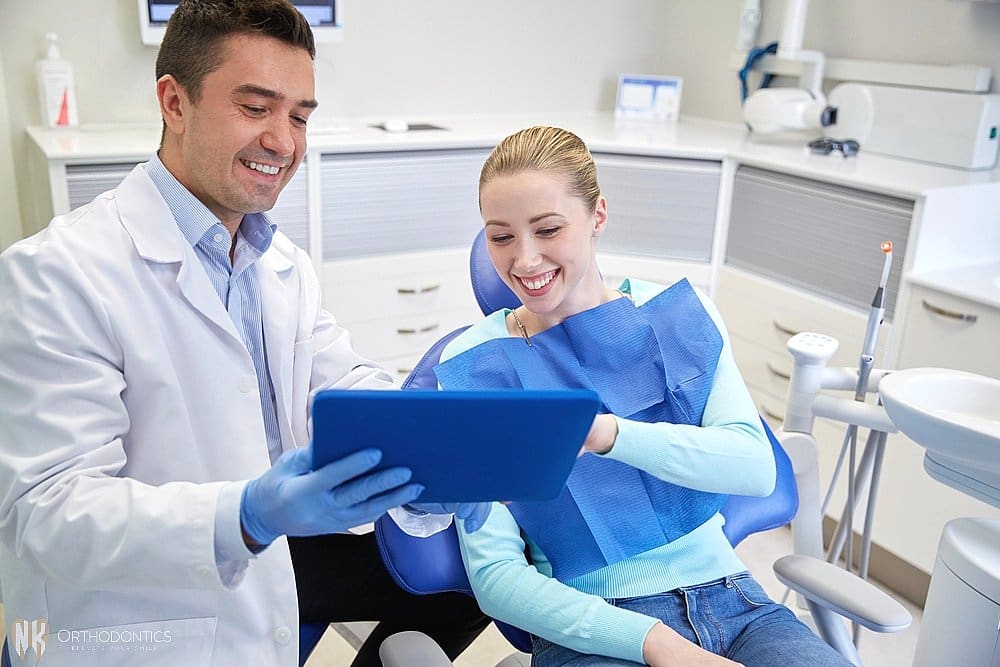
At NK Orthodontics, TMJ care begins with a gentle evaluation focused on you, so your treatment plan matches what is actually behind your symptoms.
Led by Dr. Nick Kim, our Suwanee and Tucker team examines your jaw and your bite and, when needed, uses imaging such as X-rays, 3D scans, or an MRI before recommending a plan.
This guide covers what leads to TMJ problems, how they’re diagnosed, and the treatment options available, from non-surgical care to surgery for severe cases.
What Is TMJ, and What Is a TMJ Disorder?
The TMJ works like a hinge. It helps your mouth open and close, making daily life easy. But if the joint, the muscles around it, or the tissues nearby are hurt or strained, you may develop a temporomandibular joint disorder (TMD).
Common TMJ symptoms include:
- Jaw pain or soreness, especially while chewing or talking
- Clicking or popping noises when you open or close your mouth
- Jaw “locking” or getting stuck in place
- Muscle aches in your jaw, neck, shoulders, or around your ears
- Trouble opening your mouth wide
- Frequent headaches or even migraines
- Tenderness near the jaw joint or behind the ears
- Ear pain, ringing, or a feeling of fullness in the ears
If these problems last, they can turn into chronic pain. Untreated TMJ disorders may even lead to trouble sleeping, mood swings, and stress.
What Causes TMJ Disorders?
TMJ disorders have many causes. Some are tied to your habits and lifestyle, while others come from injuries or natural wear and tear. Common reasons for TMJ pain include:
- Teeth grinding (bruxism): Many people clench or grind their teeth at night or when stressed, which puts a lot of strain on the jaw muscles and the jaw joint.
- Jaw clenching: Stress or anxiety can make you tighten your jaw during the day or while sleeping.
- Jaw misalignment: If your teeth or jaws do not line up right, the joint must work harder.
- Joint injury or arthritis: Accidents or wear from conditions like arthritis can cause swelling and inflammation in the TMJ.
- Daily habits: Chewing gum often, biting nails, eating hard or chewy foods, or sitting with poor posture may strain the jaw.
- Hereditary factors: Sometimes TMJ disorders run in families.
TMJ Warning Signs: How to Know If You Need Help
Beyond the symptoms above, watch for these signs of temporomandibular joint issues:
- Stiff, sore, or tired jaw muscles after meals or long conversations
- Grinding sounds during jaw movement
- Pain in your cheeks, temples, or ears
- A jaw that locks open or shut, even for a few moments
- Struggling to bite or chew solid foods
- Face swelling or fatigue, especially in the lower jaw and ear area
- Jaw mobility that feels limited or painful
- Sensitive teeth with no clear dental cause
If you notice these signs, don’t wait. Early care can keep small problems from turning into bigger health issues.
TMJ Evaluation and Diagnosis at NK Orthodontics
Solving TMJ pain starts with the right diagnosis. At NK Orthodontics, our team offers expert evaluation and examination for each patient, and every step is gentle and focused on you.
1. Physical Examination
A doctor or orthodontist checks around your jaw, cheeks, and neck to find tender areas and muscle spasms. You may be asked to open and close your mouth, slide your jaw side to side, or bite down. We watch your jaw movement and listen for clicking, popping, or grinding.
2. Bite Alignment and Jaw Function Analysis
Your bite is checked for signs of teeth grinding, jaw clenching, or uneven wear. Correcting jaw misalignment can lower stress on the TMJ and bring long-lasting relief. According to Dr. Andre C. Jham, a board-certified orthodontist at Star Smiles Orthodontics and Pediatric Dentistry in Bloomingdale and Naperville, IL, paying attention to these signs can help your care team spot TMJ trouble early.
3. Imaging
Sometimes X-rays, 3D scans, or an MRI are needed to see inside the jaw joint. These images reveal bone health, swelling (inflammation), or joint damage, and they help us find the best TMJ treatment approach.
TMJ Treatment Options: Finding the Best Plan for You
Everyone’s TMJ story is different, so we offer a range of TMJ treatment options. We start with simple, non-surgical services, then move to advanced care if needed.
Non-Surgical TMJ Therapy
- Mouth guards, bite guards, and splints: Custom night guards or sleep appliances (also called orthotics) hold your jaw in a restful position. They prevent teeth grinding at night, relax the jaw muscles and joints, and improve jaw function.
- Jaw exercises and physical therapy: Special stretches, gentle movements, and massage ease tension and improve jaw mobility.
- Heat or cold packs: Warm towels relax tight muscles, while cold packs bring pain relief and help with swelling.
- Relaxation techniques and home remedies: Deep breathing, mindful relaxation, and stress control help stop jaw clenching. These are key pain management techniques for TMJ problems.
- Medication: Over-the-counter anti-inflammatories or prescribed muscle relaxants can ease short-term pain and help you recover.
- Diet changes: Choosing soft foods, avoiding chewing gum, and limiting hard or chewy snacks will protect your jaw as it heals.
Advanced and Specialty Treatments
- Botox treatments: Botox injections relax the jaw muscles and may reduce pain from frequent clenching or spasms.
- Trigger-point injections: Medicine is injected into tight areas to relieve pain.
- Laser therapy: A gentle laser is used to promote healing and reduce pain and inflammation in the jaw area.
- Orthodontic services: Braces or aligners correct jaw misalignment, which may be causing your TMJ pain.
Surgical Options for Severe TMJ Disorders
Most people find relief with non-surgical treatment. For tough cases, surgery can be considered:
- Arthroscopy: Small tools and a camera treat problems inside the jaw joint.
- Arthrocentesis: Fluid washes out debris and reduces inflammation.
- Open-joint surgery: Used only if other therapies do not help and there are major joint problems.
TMJ Treatment Cost and Insurance
Cost is an important part of choosing TMJ treatment, and NK Orthodontics works to make care both affordable and easy to access. Mouth guards and basic splints usually range from $500 to $1,200. Botox or trigger-point injections often cost between $300 and $700 per visit. If braces or aligners are needed to correct the jaw, the price may fall between $3,500 and $8,000, depending on how complex the case is.
Insurance may help cover parts of your evaluation, diagnosis, and certain therapies. During your visit, we review your insurance benefits and offer flexible payment plans to reduce stress and help you get the relief you need.
TMJ Treatment Options at a Glance
| Treatment | Type | What It Does |
| Mouth guards, bite guards, and splints | Non-surgical | Hold the jaw in a restful position, prevent nighttime grinding, and relax jaw muscles and joints |
| Jaw exercises and physical therapy | Non-surgical | Ease tension and improve jaw mobility through stretches, gentle movements, and massage |
| Heat or cold packs | Non-surgical | Warmth relaxes tight muscles, cold relieves pain and swelling |
| Relaxation techniques and home remedies | Non-surgical | Help stop jaw clenching through breathing, relaxation, and stress control |
| Medication | Non-surgical | Over-the-counter anti-inflammatories or prescribed muscle relaxants ease short-term pain |
| Diet changes | Non-surgical | Soft foods and no gum protect the jaw while it heals |
| Botox and trigger-point injections | Advanced | Relax jaw muscles and relieve pain from clenching, spasms, or tight areas |
| Laser therapy | Advanced | Promotes healing and reduces pain and inflammation |
| Braces or aligners | Advanced | Correct jaw misalignment that may be causing TMJ pain |
| Arthroscopy, arthrocentesis, open-joint surgery | Surgical | Reserved for severe cases, with open-joint surgery used only if other therapies do not help |
When Orthodontic Care Isn’t the Right Fit for Your TMJ Pain
TMJ pain has many possible causes, and not all of them involve your bite. Grinding, clenching, joint injury, arthritis, daily habits, and family history can all play a role. Braces or aligners address jaw misalignment, so they make the most sense when misalignment is part of what is straining your joint. If your symptoms come mainly from other causes, simpler options such as a custom night guard, jaw exercises, relaxation techniques, or medication may be a better place to start.
Most people find relief with non-surgical treatment. Surgery is reserved for tough cases, and open-joint surgery is used only if other therapies do not help and there are major joint problems. That is why a full evaluation comes first.
What a TMJ Consultation Covers
At your consultation, we listen to your story, answer your questions, and build a care plan around your symptoms. Which tests you need depends on your exam, since imaging such as X-rays, 3D scans, or an MRI is used only when it is needed to see inside the joint. Because everyone’s TMJ story is different, your plan may look quite different from someone else’s.
If you have questions before booking, you can also reach our team directly through our Contact Us page.
Choosing the Right TMJ Specialist in Suwanee and Tucker, GA
The best TMJ care starts with a great team and modern tools. At NK Orthodontics in Suwanee and Tucker, GA, we offer:
- In-depth examinations with bite checks and up-to-date imaging
- Personalized orthodontic care plans for your unique needs and symptoms
- Caring, skilled staff using the latest technology
- Advice on lifestyle changes, jaw exercises, and pain management at home
- Support for lasting health, not just a quick fix
From your first appointment to relief and recovery, we’re with you every step.
FAQs: TMJ Treatment in Suwanee and Tucker, GA
What foods should I avoid with TMJ?
If you have TMJ, avoid foods that make your jaw work too hard. Stay away from hard or crunchy snacks like nuts, pretzels, and raw vegetables. Chewy foods such as bagels, caramel, and gum can also put pressure on your jaw. Try not to bite into whole apples or corn on the cob, and cut them into smaller pieces instead. Soft foods like yogurt, mashed potatoes, soups, and smoothies are much easier on your jaw.
Is laser therapy good for TMJ?
Laser therapy may help reduce TMJ pain for some people. It can lower inflammation and support healing in the jaw, which may improve movement and ease discomfort. The treatment is quick, gentle, and non-invasive. If you’re interested in trying it, talk with your healthcare provider to see if it is right for you.
How can I fix TMJ completely?
TMJ symptoms often get better with simple daily habits. Gentle jaw exercises, good posture, and avoiding teeth clenching can reduce strain, and a warm compress can relax tight muscles and lessen pain. A dentist or TMJ specialist may also suggest a nightguard if you grind your teeth. Full relief can take time, but these steps can help improve your symptoms.
Can braces or aligners help with TMJ pain?
Orthodontic services such as braces or aligners correct jaw misalignment, which may be causing your TMJ pain. Your evaluation, including a bite alignment and jaw function analysis, helps show whether misalignment is part of the problem.
Does insurance cover TMJ treatment?
Insurance may help cover parts of your evaluation, diagnosis, and certain therapies. During your visit, our team reviews your insurance benefits and offers flexible payment plans, so you can plan your care with less stress.
Sources: Clinical descriptions of TMJ evaluation, symptoms, causes, and treatment options as provided by NK Orthodontics, Suwanee and Tucker, GA.

Related Reading:
Ready for Relief From Jaw Pain in Suwanee or Tucker?
At NK Orthodontics, your TMJ consultation covers your symptoms, your questions, and a care plan built around what is behind your jaw pain, at our Suwanee or Tucker office.
Schedule Your Free Consultation
Free consultation for new patients.